
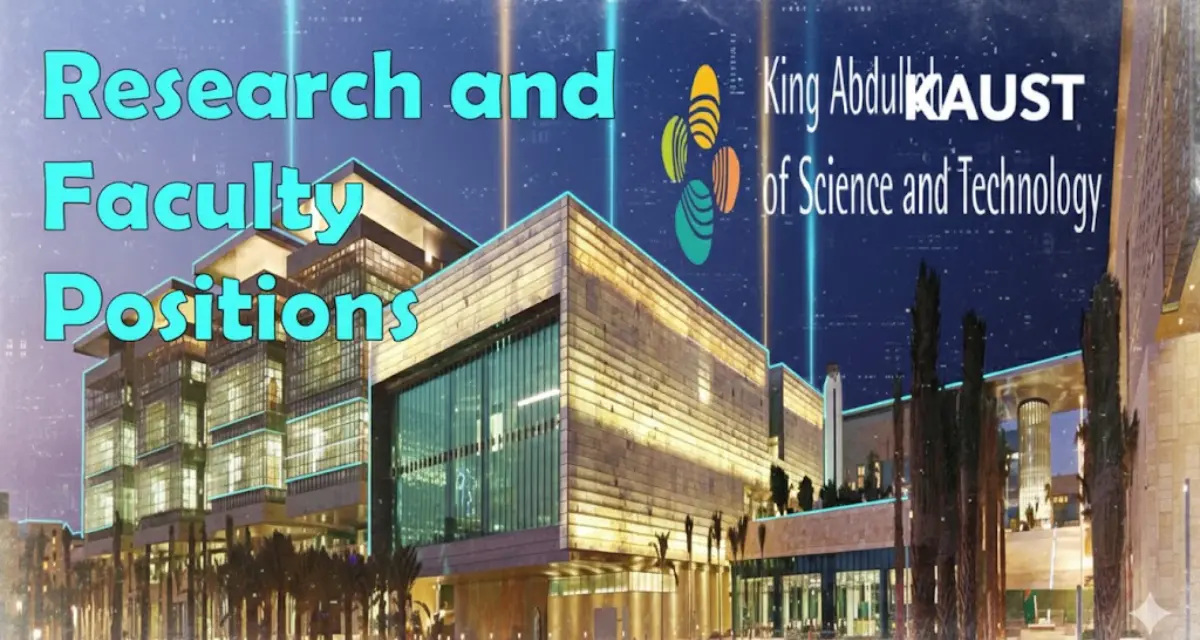
KAUST postdoctoral and faculty positions have been officially announced for the 2026 academic and research cycle, creating a major opportunity for researchers, scientists, and academic professionals worldwide. King Abdullah University of Science and Technology (KAUST), one of the most prestigious research universities in Saudi Arabia, is inviting applications for a total of 52 positions across multiple disciplines.
This large-scale recruitment drive reflects KAUST’s growing focus on advanced research, innovation, and global academic collaboration. Candidates selected under this initiative will become part of a highly international and research-driven campus known for cutting-edge facilities and strong institutional support.
Overview of Available Positions at KAUST
The current openings include a mix of postdoctoral research roles and faculty appointments, catering to both early-career researchers and experienced academics. Postdoctoral positions are primarily research-focused, allowing scholars to work on high-impact projects alongside globally recognized faculty members.
Faculty positions are available at different academic levels and involve responsibilities such as leading independent research groups, supervising graduate students, publishing in reputed journals, and contributing to teaching activities. These roles are designed for individuals with a strong academic background and a clear research vision.
Research Areas and Academic Disciplines
KAUST postdoctoral and faculty positions span a wide range of disciplines, including science, engineering, technology, and interdisciplinary research fields. The university actively promotes collaboration between departments, encouraging innovative research that addresses global challenges such as sustainability, energy, climate, data science, and advanced materials.
Researchers joining KAUST benefit from access to world-class laboratories, advanced computational resources, and generous research funding. The institution places strong emphasis on original research, innovation, and real-world impact rather than traditional academic constraints.
Eligibility Criteria for Applicants
Applicants for postdoctoral roles are generally required to hold a PhD or equivalent doctoral degree in a relevant subject. A strong research profile, including peer-reviewed publications and demonstrated research skills, is essential.
Faculty applicants are expected to show academic excellence, leadership potential, and the ability to establish an independent research program. Teaching experience, mentorship skills, and a clear long-term research plan are considered key advantages during the selection process.
KAUST encourages applications from candidates of all nationalities, supporting diversity and equal opportunity across its academic community.
Salary, Benefits, and Work Environment
One of the major attractions of KAUST postdoctoral and faculty positions is the highly competitive compensation package. Selected candidates typically receive attractive salaries, research funding, housing support, healthcare benefits, and relocation assistance.
The KAUST campus offers a modern, self-contained living environment with international schools, recreational facilities, and a multicultural community. This supportive ecosystem allows researchers and faculty members to focus on innovation and academic growth.
Application Process and Selection
Interested candidates must submit an online application along with essential documents such as a curriculum vitae, research statement, and academic references. Depending on the position, applicants may also need to provide a teaching philosophy or a detailed project proposal.
Read More: UK Dependant Visa Rules 2026: Eligibility, New Changes, Fees & Full Guide
Shortlisted candidates are usually evaluated through academic review, interviews, and research presentations. The selection process focuses on research quality, future potential, and alignment with KAUST’s strategic research goals.
Why KAUST Positions Matter in 2026
With Saudi Arabia investing heavily in education, science, and innovation, KAUST continues to play a central role in shaping the region’s research ecosystem. These new openings offer scholars a rare chance to work in a globally competitive research environment while contributing to transformative scientific progress.
For researchers seeking long-term academic growth, international exposure, and strong institutional backing, KAUST postdoctoral and faculty positions in 2026 stand out as a career-defining opportunity.

