
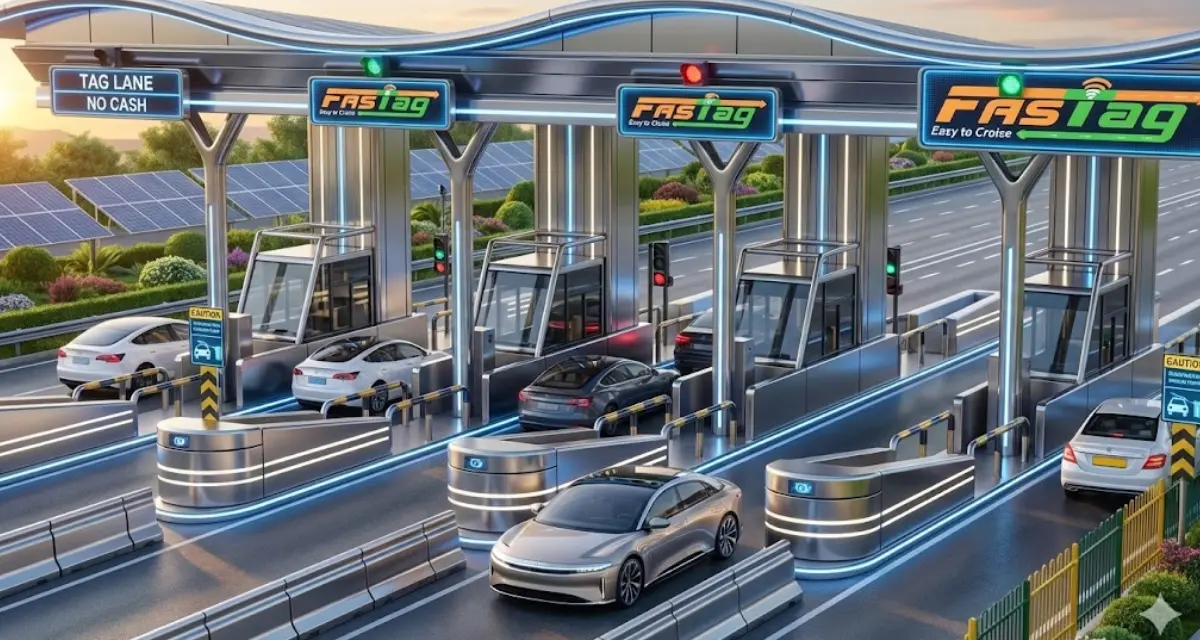
fastag kyc update brings major relief for car owners in India, as the requirement for a separate KYC process for cars using FASTag has now been officially removed, making toll payments smoother and hassle-free.
Car owners across India have received a welcome update regarding FASTag compliance rules. Under the new policy, drivers of private four-wheelers no longer need to go through a separate Know Your Customer (KYC) verification process specifically for their vehicle’s FASTag. This change is expected to simplify how vehicle owners use FASTag for toll payments on national highways.
Simplified FASTag Process for Private Vehicles
Previously, drivers were often required to complete a separate KYC or Know Your Vehicle (KYV) process after FASTag activation to verify details such as the car registration and tag authenticity. Many vehicle owners faced delays, repeated follow-ups with issuing banks, and even toll tag blocks due to incomplete post-activation checks.
With the new system, this extra step has been removed for cars, jeeps, and vans. Now, vehicle verification is completed before the FASTag is activated by the bank or issuer. Once activated, the FASTag can be used smoothly at toll plazas without worrying about additional verification requirements later.
What This Means for Car Owners
This update brings several practical benefits for road users:
-
No Post-Activation KYC Hassle: Car owners will not have to upload documents or vehicle photos after the FASTag has been activated, reducing paperwork and repeated requests from banks.
-
Fewer Delays at Toll Plazas: Because FASTag activation doesn’t depend on an ongoing KYC process, drivers can travel uninterrupted without having their tag blocked or deactivated.
-
Improved User Experience: Toll journeys are expected to be quicker and simpler, especially for new vehicle owners obtaining a FASTag for the first time.
Even for FASTags issued before the change took effect, the KYV requirement has largely been eased. Routine verification will not be enforced unless specific issues arise, such as complaints, incorrect tag issuance, or suspected misuse.
Banks to Do Verification Upfront
Under the updated approach, banks and FASTag issuers are now responsible for checking vehicle details against official databases such as the VAHAN registry before activating the FASTag. This pre-activation check allows the system to confirm a vehicle’s registration and details without needing users to submit extra documents later.
This shift to upfront verification is intended to reduce inefficiencies and make the overall process more streamlined for users.
Still Necessary to Keep Other Information Updated
While the separate KYC process for FASTag has been removed for cars, vehicle owners should still ensure all other account details are correct. This includes maintaining accurate mobile contact information, linking the correct vehicle registration number, and keeping sufficient balance in the FASTag wallet to avoid toll payment issues.
Read More: Weather Update February 4 2026: Rain, Snowfall, Fog and Cold Wave Alert Across India
Ensuring up-to-date information can help prevent any unexpected hurdles while traveling on highways or passing through toll booths. This fastag kyc update is expected to benefit millions of private vehicle owners across the country. Overall, the fastag kyc update simplifies the FASTag system by removing unnecessary verification steps for cars.
Boost to Digital Toll Payments
The change is likely to encourage more motorists to adopt FASTag as the preferred mode of toll payment. With fewer compliance barriers, private vehicle owners may be more inclined to use and recharge FASTag accounts regularly, supporting India’s goal of a fully digital toll collection system on national highways.
A Positive Step for Road Users
In summary, the removal of the mandatory post-activation KYC requirement for cars with FASTag aims to make digital toll usage easier, faster, and more reliable. By shifting verification responsibilities to banks and completing checks before activation, the process becomes less cumbersome for vehicle owners. This update offers a meaningful convenience boost for millions of drivers who rely on FASTag for everyday highway travel.

