
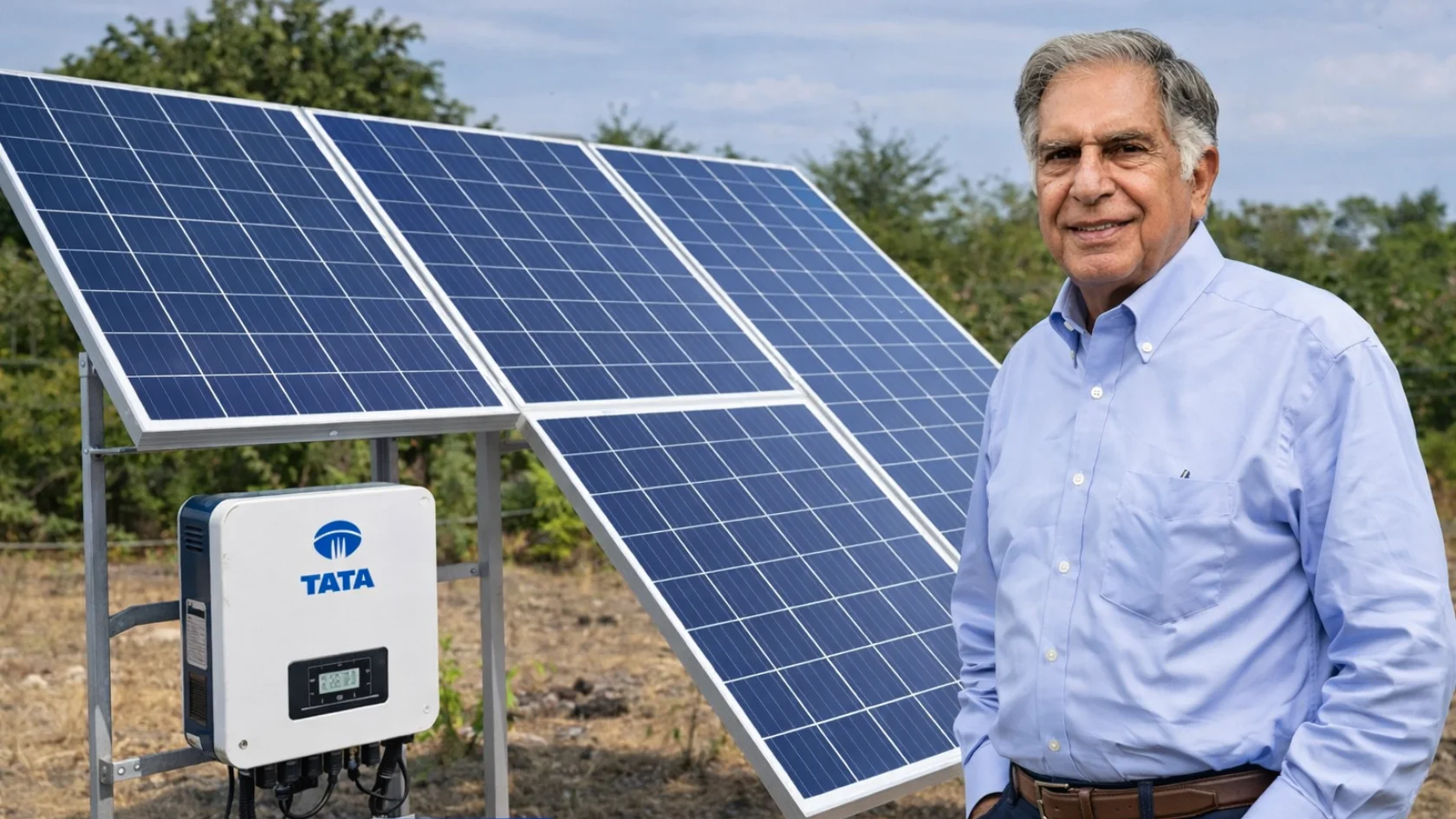
Tata Solar Setup: Middle-class homes are moving toward rooftop solar because the savings math is easy to track every month. A 3kW Tata solar setup becomes attractive when the home can consistently offset 300–450 units, because that range maps directly to ₹2,500–₹3,500 monthly value at common tariffs. This size fits most urban rooftops and matches the daytime loads that run daily in Indian homes, including fans, lights, fridge, TV, router, and limited daytime AC. The decision becomes stronger when net metering is active, because unused daytime units get credited and reduce the bill instead of getting wasted.

System and installation quality
A 3kW rooftop system is usually built with 6 panels of 540–550W or 7–8 panels of 375–450W, paired with a 3kW grid-tied inverter, mounting structure, DC/AC cables, and protection devices. Rooftop space required stays around 180–250 sq ft depending on panel wattage and walkway spacing. Structure quality must be rust-protected and anchored for wind load. DC cabling must be UV-rated and routed inside conduit. Proper earthing and surge protection reduce inverter failure risk during storms and voltage spikes.
Daily generation and savings
A 3kW system typically generates 10–15 units per day in many Indian cities, which equals 300–450 units per month across seasons. At ₹8 per unit tariff, the monthly saving value becomes ₹2,400–₹3,600, and at ₹9 per unit it becomes ₹2,700–₹4,050. Savings rise when the home consumes more electricity in daytime because solar units get used directly. Summer output often stays higher and monsoon output drops, so a stable planning band for middle-class homes is 300–400 units per month instead of the peak month number.
Net metering and output factors
Net metering decides whether surplus daytime units reduce the bill or get wasted. Homes with strong daytime usage can still save without export credits, but net metering improves savings when the house stays empty during working hours. Output drops with shade, dust, and poor tilt angle. Shade from a water tank for 1–2 hours daily can cut monthly generation sharply, so layout planning is critical. Cleaning every 15–30 days protects output in dusty areas. Inverter monitoring helps track daily units and detect faults early.
Warranty, maintenance and safety
Panels generally carry long performance warranties and shorter product warranties, while inverters often carry 5–10 years depending on model and AMC. Maintenance is mostly cleaning and yearly electrical inspection because grid-tied systems have no battery replacement cost. Safety must include DC isolator, AC MCB, surge protection device, and proper earthing to reduce shock and fire risk. Grid-tied systems shut down during power cuts, so backup comfort needs a hybrid inverter and battery, which increases system cost.
Price, subsidy and EMI shock
A 3kW Tata solar setup is expected to cost ₹1.50 lakh–₹2.10 lakh depending on panel wattage, inverter grade, structure quality, and wiring, and rooftop solar subsidy can reduce the effective cost by around ₹30,000–₹60,000 depending on DISCOM rules and eligibility, bringing net cost closer to ₹1.20 lakh–₹1.80 lakh for many homes.
EMI can start at ₹3,499 per month with a ₹25,000 down payment on a 60-month plan for a ₹1.50 lakh package, while a higher ₹2.10 lakh package can sit around ₹4,999 EMI with a ₹35,000 down payment on the same tenure, and with 300–450 units per month generation at ₹8–₹9 per unit tariff the saving value stays around ₹2,400–₹4,050, which is why 3kW solar feels like fast bill relief for middle-class households.

