
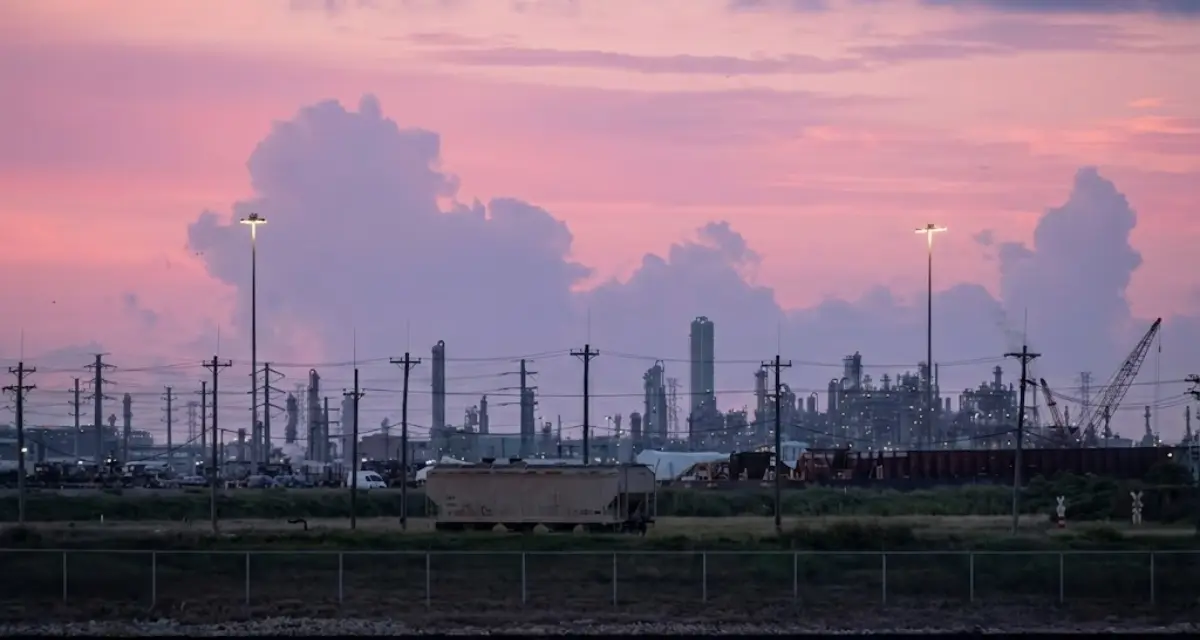
us venezuelan oil imports are rising sharply, putting pressure on US Gulf Coast refiners as they struggle to manage the sudden surge in heavy crude supply.
Oil refiners along the US Gulf Coast are facing challenges in handling a rapid increase in Venezuelan crude oil shipments, highlighting early obstacles in the implementation of a major supply agreement between the United States and Venezuela.
The surge in Venezuelan oil exports to the United States has left some refiners unable to find buyers quickly enough, resulting in unsold volumes and pressure on pricing in the heavy crude market.
Supply Deal and Trade Resumption
In recent weeks, shipments of Venezuelan crude oil to the US have risen sharply as part of a new oil supply agreement aimed at reopening trade relations that had been dormant for years. Total exports from Venezuela to the United States nearly tripled within a short period, reflecting a significant shift in global crude flows.
The sudden influx has come after sanctions were relaxed, and trading companies received approval to export Venezuelan crude to the US market — a move that represents a major change in energy trade patterns.
Refiners Face Configuration Limitations
Despite the increased supply, many Gulf Coast refiners are struggling to absorb the surge due to limited demand and refinery configuration constraints. Some facilities are fully equipped for domestic and Canadian heavy crude supplies, but not all have the flexibility to shift rapidly to heavier grades from Venezuela without costly adjustments.
Industry insiders report that some cargoes are being stored offshore or diverted because there are not enough takers at current prices. Although offers for Venezuelan heavy oil come at discounted rates compared with international benchmarks, that has not guaranteed quick uptake by refiners.
Pricing and Competitive Challenges
Venezuelan heavy crude has been offered at a discount below global benchmark prices in an effort to attract refiners. However, competing supplies — such as discounted Canadian heavy crude — remain priced competitively, giving refiners alternatives that sometimes undercut Venezuelan grades.
Read More: US Iran Nuclear Talks Oman: High-Level Discussions Begin Amid Rising Middle East Tensions
Analysts suggest that refiners may also be cautious due to concerns about the quality of heavy Venezuelan crude, which can require more complex processing. Adjusting facilities to process such grades can involve technical and financial hurdles, limiting rapid absorption of new shipments.
Capacity and Processing Estimates
Some refineries have announced they can process limited volumes of Venezuelan crude, but these capacities fall short of the current supply surge. As a result, significant quantities of imported barrels remain unprocessed or are stored while refiners deliberate on integration strategies.
Industry leaders have indicated that for Venezuelan crude to compete effectively, pricing must remain attractive enough to justify displacement of other heavy crude sources, and refiners must be willing to adapt to handling it at scale.
Ports, Storage and Temporary Solutions
Because of the mismatch between exports and immediate refinery throughput, some oil cargoes are being redirected to storage facilities in the Caribbean or held offshore. Traders and shipping data show tankers waiting to discharge at US ports, highlighting logistical bottlenecks in addition to processing constraints.
Refiners and traders alike are monitoring the situation closely to assess how quickly refinery capacity can adjust to heavier crude supply without significant disruption.
Outlook for Venezuelan Crude Imports
The current challenge underscores the complexities of reintegrating Venezuelan oil into the US energy supply chain after years of sanctions and trade disruption. While the recent surge reflects strong initial momentum under the new deal, analysts say it may take time for refiners to fully adjust operations and for market pricing to stabilize.
In the long term, increased Venezuelan crude flows could play a role in diversifying heavy crude supply for US refiners, but the immediate priority for the industry is managing the existing surplus and balancing demand with available processing capacity.

