
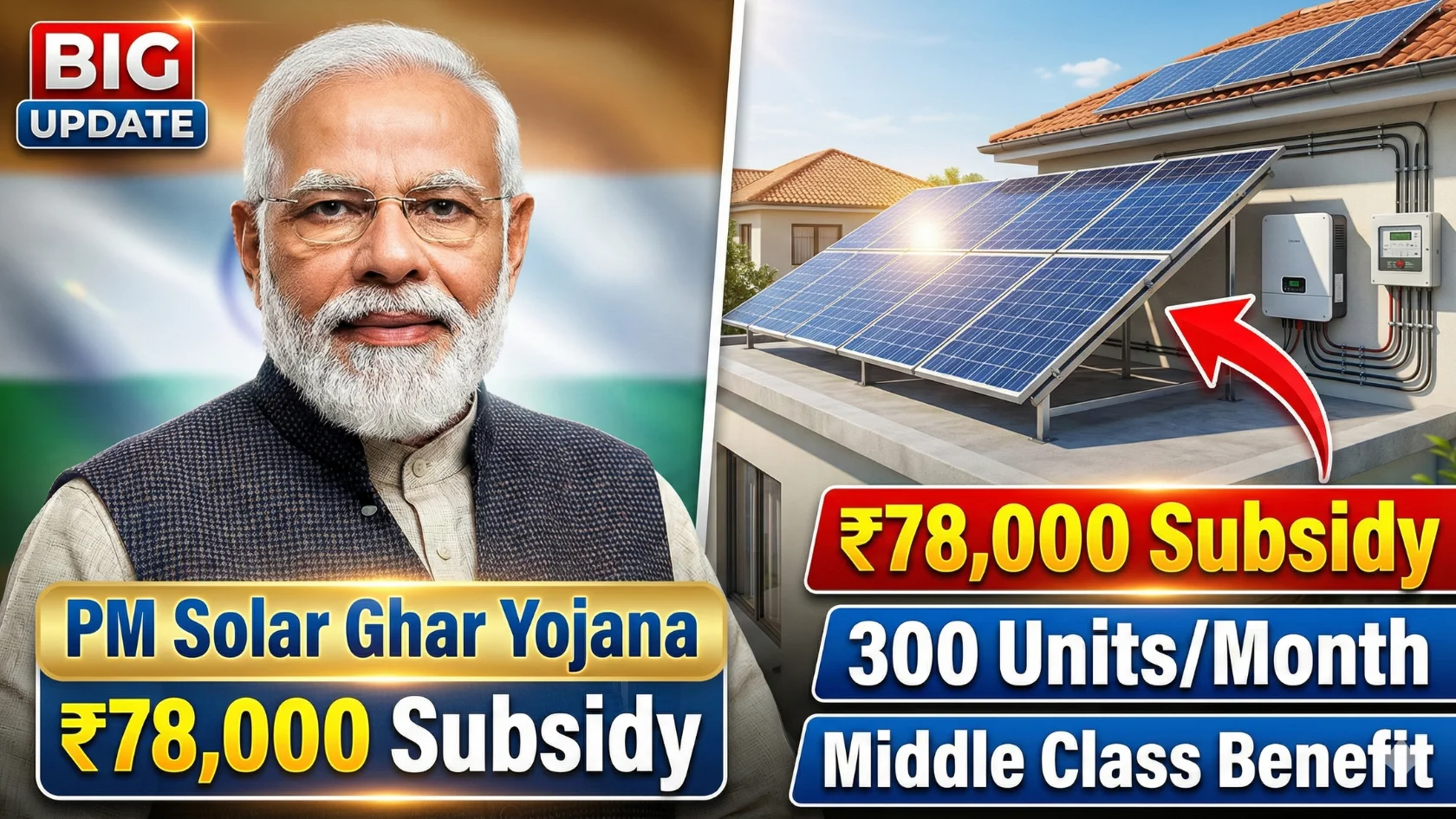
PM Solar Ghar Yojana is being searched heavily because it directly targets one pain point in Indian homes: monthly electricity bill stress. Under PM Surya Ghar: Muft Bijli Yojana, the government supports rooftop solar for households so they can generate their own power, and the scheme is positioned around up to 300 units per month benefit for eligible homes. The biggest reason it goes viral is the subsidy math, because the scheme subsidy can go up to ₹78,000 for systems up to 3kW under the current structure, which can cut the net installation cost sharply for middle-class families.
Who Gets The Benefit
This scheme is designed for residential households installing rooftop solar through the official process on the national portal with DISCOM coordination. The benefit is strongest for homes that use power in daytime, because solar generation offsets billed units directly. Flats and group housing have separate provisions and workflows, so individual independent houses typically find the process simplest. The key rule is that the installation must be done through the approved system and verified by DISCOM, because subsidy is tied to successful commissioning and approval.
Subsidy Numbers That Matter
The current subsidy structure is simple for most buyers. For claims submitted on/after 5 January 2024, the subsidy is ₹30,000 per kW up to 2kW, and ₹18,000 for the additional kW from 2kW to 3kW, making the maximum ₹78,000 for 3kW and above (capped at 3kW). This is why 3kW is the “sweet spot” people talk about, because it often matches middle-class monthly usage and also hits the top subsidy cap.
How Much Power You Can Expect
A typical 3kW rooftop system in many Indian cities generates around 10–15 units per day, which becomes 300–450 units per month depending on season, dust, and shade. If your tariff is ₹8–₹9 per unit, that generation value often maps to the ₹2,400–₹4,050 monthly bill reduction band. Net metering matters because exported surplus units can reduce the bill further depending on your DISCOM rules. The biggest output killers are shade from water tanks and dust buildup, so layout and cleaning decide real-world results.
Net Metering And Maintenance Reality
Many people think batteries are required, but most home rooftop systems under this scheme are on-grid, which means they don’t need batteries for normal bill savings. Net metering is the key process step that links your solar generation to billing adjustment, and the portal flow is designed to connect applicant, vendor, and DISCOM steps in one place. Maintenance is largely cleaning plus periodic checks, and approved vendor processes generally include structured support.
Price, Subsidy And EMI Math
A 3kW rooftop solar setup is commonly quoted in the ₹1.50 lakh–₹2.10 lakh band depending on panel wattage, inverter grade, structure quality, and wiring, and with a ₹78,000 subsidy cap the net effective cost can come down near ₹72,000–₹1.32 lakh after DISCOM approval and subsidy credit. EMI can start around ₹1,699 per month with a ₹25,000 down payment on a 60-month plan for a ₹1.50 lakh package after subsidy, while a higher-end setup can sit near ₹2,999 EMI with a ₹35,000 down payment on the same tenure, and with 300–450 units monthly generation at ₹8–₹9 per unit, the savings value often sits around ₹2,400–₹4,050 per month, which is why PM Solar Ghar Yojana feels like fast bill relief for middle-class homes.

