

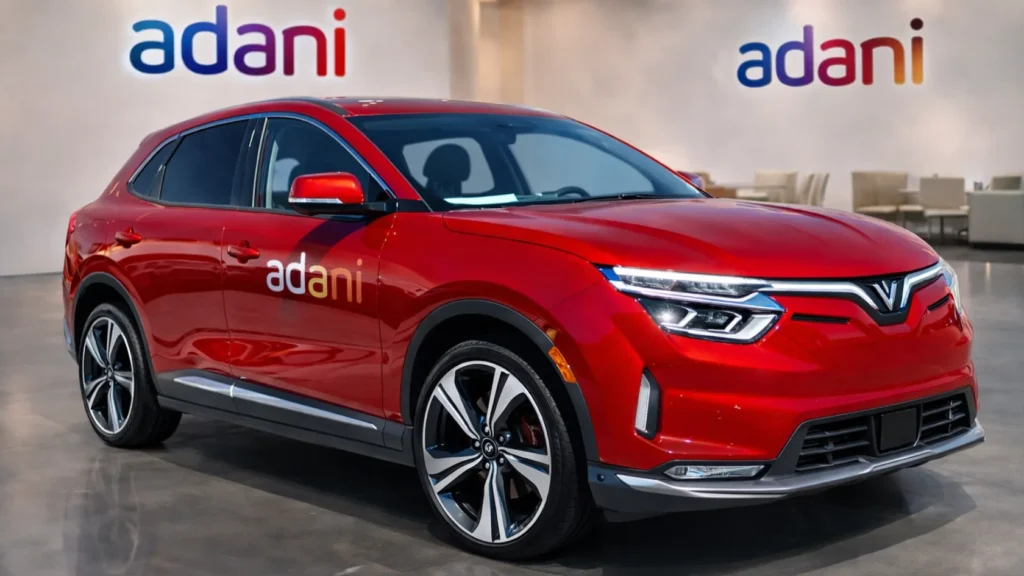
Adani Racer EV Car : India’s EV car space is reacting sharply to the Adani Racer EV launch because it brings three attention-grabbing numbers together: 600Km claimed range, 180Km/h top speed, and a ₹99,000 down payment entry point. A 600Km figure changes long-distance planning for families who regularly drive between cities, and a 180Km/h claim positions the car as highway-capable rather than city-limited. The ₹99,000 down payment headline works because it pulls the car into reach of buyers who usually stop looking once prices cross ₹15 lakh. The real decision depends on battery size, charging speed, and how the finance math plays out over time.
Design and Build Quality
A long-range EV needs a reinforced floor and a rigid body shell because the battery pack adds significant weight. Panel fit, door weight, and underbody shielding decide durability on broken roads and speed breakers. High-speed stability depends on wheelbase, suspension tuning, and tyre width, not just motor output. Cabin quality matters because family buyers notice rattles and seat comfort within the first 1,000Km. Water sealing around the battery and motor area is critical for monsoon driving, and ground clearance must remain usable even with a fully loaded cabin.
Range and Charging
The 600Km claim sets expectations for fewer charging stops and relaxed usage. At 50Km daily, 600Km equals 12 days per charge, and at 80Km daily it equals 7.5 days on paper. Real-world range depends on speed, AC usage, tyre pressure, payload, and road gradient, with sustained highway driving reducing usable distance faster than city use. Charging convenience depends on DC fast-charging support, battery cooling, and charger availability. Without published 10–80% charging time and peak DC kW rating, the range headline remains incomplete, because refill time matters as much as distance.
Performance and 100Km/h Speed Reality
A 180Km/h top speed is a performance statement, but daily usability is judged by smooth acceleration, confident overtakes, and stable cruising at 100–120Km/h. EV torque should deliver quick 0–60Km/h response for city gaps, while highway confidence depends on chassis balance and steering control. Braking hardware must handle repeated high-speed stops without fade, and tyre compound must manage heat on long drives. Battery thermal management decides whether performance stays consistent after 30–40 minutes of continuous driving in Indian summer conditions.
Features and Safety Features
A car positioned with high range and speed must deliver strong safety basics. ABS, ESC, multiple airbags, and all-wheel disc brakes are expected at this level. EV-specific features like adjustable regeneration, accurate range prediction, charging scheduling, and battery health data add daily value. A clear instrument display showing real-time consumption and remaining range in Km helps drivers plan trips accurately. Warranty terms on battery and motor, service interval clarity, and spare parts pricing transparency decide long-term trust for middle-class buyers.
Price and EMI Shock
Adani Racer EV Car is expected to be priced between ₹15.00 lakh and ₹19.00 lakh depending on battery and variant, and the ₹99,000 down payment plan targets early buyer attention rather than low total cost. On a 60-month loan at 10.99% interest, a ₹15.00 lakh variant with ₹99,000 down payment leaves a ₹14.01 lakh loan and results in an EMI of about ₹30,450 per month, while a ₹19.00 lakh variant with the same down payment leaves a ₹18.01 lakh loan and pushes EMI close to ₹39,150 per month on the same tenure.

